Over time, even the most well-maintained pools can eventually experience structural issues, especially in the varied climates of Florida, Mississippi, and Alabama. If you’ve been putting off pool repairs because of cost concerns, it’s important to keep in mind that the expense and complexity of pool reconstruction only worsen the longer repairs are delayed.
But how do you know when you’re dealing specifically with structural problems in an aging pool? Here’s how we help in identifying a structural issue from the normal wear and tear that’s expected with an older swimming pool.
What Is Pool Reconstruction?
The terms “pool renovation” and “pool reconstruction” are sometimes used interchangeably, but they are actually different levels of repair. Pool renovation typically refers to updating and improving the look of a swimming pool. Renovation may include minor repairs or an extensive makeover that turns a basic pool into a backyard oasis.
Reconstruction can also include an aesthetic makeover, but at its core, pool reconstruction addresses foundational issues that threaten pool safety or efficiency. It’s possible that poor installation or an improper design could lead to structural problems, but there are many other factors that can affect the structure of a swimming pool.
For example, over time, the soil around a swimming pool shifts, expands, and contracts. Soil inconsistencies can lead to problems that impact the pool’s structural integrity. Tree roots, heavy winds, rainstorms, and aging materials can also damage the pool structure.
When you determine that the signs of structural damage have appeared, a simple aesthetic makeover isn’t enough to keep a swimming pool safe for use. Instead, that’s when it’s best to discuss pool reconstruction with repair experts.
How to Identify the Signs It’s Time for Swimming Pool Reconstruction or Resurfacing
You can expect to see surface issues appear on an older pool, especially one that’s seen a lot of use over the years. Many small problems are likely just minor repairs that can be easily taken care of. However, some seemingly minor issues may be early signs of structural problems. A pool’s age can tell a lot about the structure and needs.
Seeing a Visible Crack or Multiple Surface Cracks in Your Pool’s Shell
Thin or spiderweb cracks that appear in the plaster are typically not a concern. Cracks that are wider than the edge of a dime or those that go deep into the pool’s shell may indicate structural damage, though.
Also, look for structural cracks on the floor of the pool and around the main body of the pool. Cracks that appear around fittings could mean foundational issues.
Dropping Water Level
Where does the water go? It’s normal to lose water due to backwashing or heavy splashing, but if your pool is losing water for no apparent reason, the problem could be a structural leak.
Identifying if areas around your pool or yard are consistently wet or if you’re experiencing higher-than-normal water bills, an underground leak could be pushing water up and out of the pool shell, causing a structural issue.
Uneven Decking
Sometimes, the area around a pool can warn of structural problems. If the decking or patio around the pool is lifting, sinking, or pulling away from the edge of the swimming pool, soil settlement could be impacting the pool’s stability. When this is the case, it may be necessary to reconstruct the deck or patio while the pool is repaired.
Bulging Pool Walls
It’s not an optical illusion; pool walls may appear to bulge outward or lean inward when they are under extreme pressure. Bulging walls can be a sign of critical structural damage. Without immediate attention, the pool could collapse in on itself.
Rough Plaster
When you run your hand across it, the plaster inside the pool’s surface should feel smooth and even to the touch. Peeling, flaking, and other rough patches could indicate that the plaster is deteriorating and the pool needs to be resurfaced. Damaged plaster could also be a sign of shifting or weakening walls.
Loose or Damaged Tile and Coping Stones
Loose tiles and coping stones may be a normal issue for an aging pool, but wobbly stones and tiles could be related to structural damage. Tiles and coping stones aren’t just aesthetic; part of their purpose is to keep water from leaking into the pool structure. Broken, cracked, and loose tiles could lead to major problems if they aren’t repaired quickly.
Issues With Water Quality
Maintaining your pool’s water quality can sometimes seem like a puzzle that’s impossible to solve. Frequent issues may not be your fault, however.
Structural problems can make it more difficult to keep water clean and fresh. If you’re experiencing any of these issues regularly, consult with a pool reconstruction expert:
- Persistent cloudiness
- Imbalanced chlorine levels
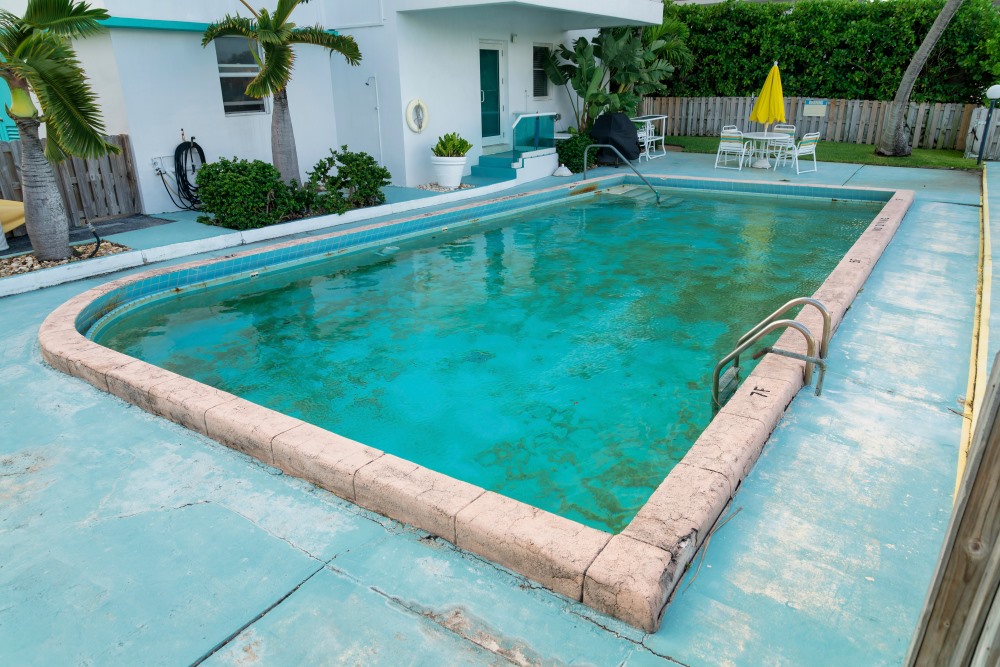
- Green, blue, or brown stains on pool surfaces
- Strong chemical odors
- Algae growth, especially when it reoccurs in the same areas, may also be a sign of a structural problem.
Equipment Malfunctions
A swimming pool’s mechanical systems work in cooperation with all the other systems, including the foundational network.
Occasional equipment problems are an expected part of pool maintenance, but if equipment breakdowns are frequent, there could be bigger problems.
Consider a structural inspection if you’ve had more than your fair share of these problems lately:
- Debris in the pump basket
- Heater failure or no temperature regulation
- Circuit breaker tripping
- Reduced water flow
- Poor circulation
- Unusual noises, such as grinding or screeching from the filter or pump
- Air bubbles appearing in the return jets
Equipment malfunctions can seem minor and unrelated, but without an inspection, you may find yourself chasing one problem after another.
Is Your Swimming Pool Showing Signs of Structural Problems?
A backyard swimming pool can provide endless fun for the whole family. Regular maintenance helps keep your pool running efficiently and can help prevent minor problems from turning into major repairs. But if your pool is older than 20 years, it could be showing signs of aging that could harm its foundation.
The team at Blue Haven Pools on the Gulf offers comprehensive pool repairs and maintenance. If your older pool needs reconstruction, our experts can help you design a modern new swimming pool that your family can continue to enjoy for years to come. Contact us to get started today.