When it comes to practicing good pool maintenance, water chemistry is your biggest concern. Knowing how to maintain a good chemical balance will protect your pool equipment and ensure healthy swimming. Use this guide to learn how to properly test and adjust your pool water.
The Chemicals You’ll Need for Good Pool Maintenance
Reduce your need for pool repairs through good pool care practices. Each of the following chemical products serves a different purpose in pool maintenance.
Pool Shock and Water Sanitizers
Pool shock chemicals sanitize the water. Use them to shock the water after a period of nonuse, stormy weather, or excessive algae growth. Chlorine-based products include Cal Hypo or Di-Chlor. The cyanuric acid in Di-Chlor protects the chlorine from the sun’s UV rays.
Chlorine-free pool shock options include potassium monopersulfate and other oxidizing agents. These products prevent combined chlorine (chloramines) from developing.
Water Balancers
It’s a good idea to have a full stock of water balancers on hand to adjust the water chemistry.
Alkalinity Increasers
Use ordinary baking soda to boost the water’s alkalinity. This is a handy substance to have since it will easily lower the acidity of the water.
Calcium Hardness Increasers
Use calcium chloride and similar products to raise the calcium hardness in the water. Increase calcium hardness when the level gets lower than 150 ppm (parts per million).
Chlorine Neutralizing Agents
Add these substances to the water when the chlorine content is excessively high. Exposure to concentrated levels of chlorine can irritate the eyes and skin. It can also lead to respiratory problems or lung damage. High amounts of chlorine will corrode your pool equipment as well.
pH Adjusting Agents
Keep a good pH balance in your pool water. Use soda ash (sodium carbonate), sodium bisulfate (dry acid), and muriatic acid to regulate the water’s pH level.
Algae Control
You can usually clean algae growth with simple pool maintenance, but the overgrowth of algae requires stronger methods. By using phosphate removers, you can eliminate a nutrient that algae need to survive. Additionally, prevent growth by using algaecides on pool surfaces.
Pool Cleaning Chemicals
Use filter cleaners to remove oil, grime, and other contaminants from the pool filters. If you have a tile or vinyl pool lining, ask Blue Haven Pools on the Gulf about special cleaning agents for these surfaces.
3 Methods for Testing Pool Water Chemistry
When planning pool maintenance, you can choose from a variety of water testing methods. Choose whichever you prefer, or look for a method that provides the most accurate results for your pool.
1. Test Strips
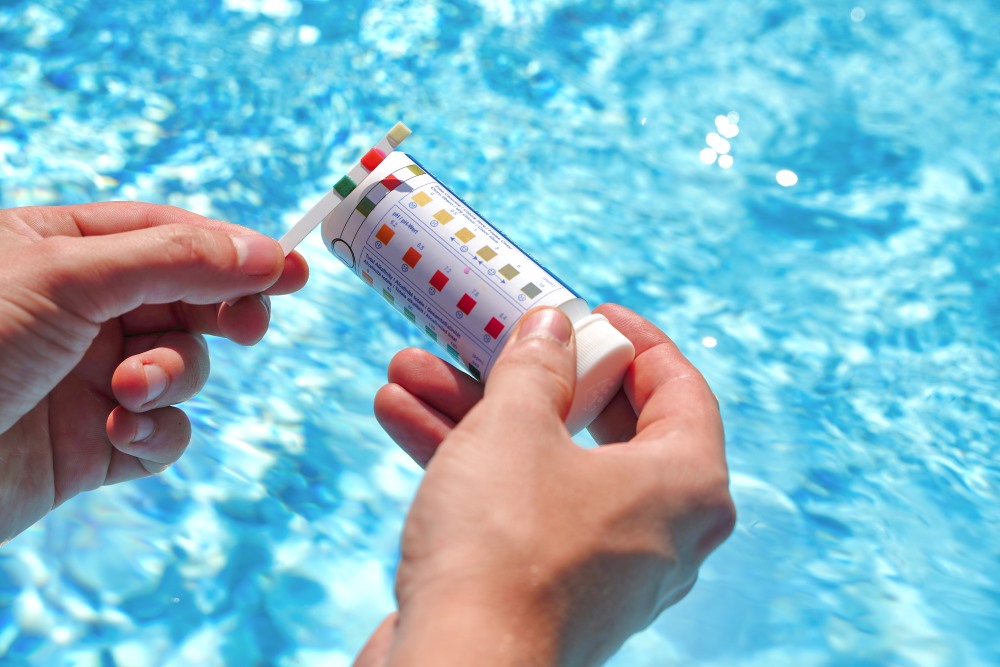
Basic test strips measure the pH, alkalinity, and chlorine levels in the water. Special test strips measure the TDS (total dissolved solids), salt, or additional elements. Hold the strip under water for up to three seconds. Keep the strip steady for 15 seconds with the padded side facing toward you. Compare the color of the pad to the chart on the test strip package to find the closest match.
2. Test Kits
When taking water samples, make sure you dip the receptacle 18″ or deeper into the pool water. Fill the test vials to the required level. Each tube requires its own reagent, so follow the instructions. Seal each tube and shake it carefully. As the water changes colors, compare the color to the chart on the test kit package.
3. Digital Testers
There are digital testers on the market that are useful for quick testing. These devices connect to smartphone apps to provide easy access to the test results. Some drawbacks to digital testers include higher costs and less accurate results.
Obtaining the Right Chemical Balance in Your Pool
Even after you test the water, you’ll have to know how to react to the test results. Follow these steps to appropriately modify the chemical content in your pool water.
Check the Alkalinity
If the pool water’s alkalinity drops below 80 ppm, there is enough acidity to corrode your pool equipment. Keep the alkalinity between 80 and 120 ppm. Use baking soda to raise the alkalinity in the water. If the alkalinity is too high, dry acid or muriatic acid will raise the acidity.
Measure the pH Level
A low pH level will damage your swimming pool’s lining or surface. If the pH level becomes excessive, the water will become cloudy and cause skin rashes. Adding soda ash to the water will increase the pH level. Bring the pH level down by adding dry or muriatic acid. Try to keep the water within the 7.4 to 7.6 pH range.
Determine Calcium Hardness
Keep calcium hardness between 200 and 300 ppm. If it drops too low, a calcium hardness increaser will help. When calcium hardness exceeds 400 ppm, partially drain and refill the pool to dilute the water.
Sanitize With Chlorine Tablets
A storm or high winds can contaminate the pool water. To address this issue, add chlorine in liquid, powdered, or tablet form. Under normal circumstances, the chlorine level should have an average range of 1 to 3 ppm.
Measure for Cyanuric Acid and Dissolved Solids
Cyanuric acid (CYA) is a stabilizing agent that prevents the sun from radicalizing free chlorine in your pool water. For a chemical-based swimming pool, keep the CYA level between 35 and 60 ppm. If you have a saltwater pool, the CYA content should stay within the 60 to 80 ppm range.
When you measure the TDS in your pool, you’re calculating the amount of dissolved solids (salt, algae, etc.) in the pool water. Keep the TDS level within a range of 1,200 to 1,500 ppm. If you have high TDS readings, partially or fully drain your pool. Refilling the pool will solve the problem.
Shock the Pool
You’ll occasionally shock the water by increasing its chlorine content. Extra chlorine will kill bacteria, algae, and other contaminants. Shock the pool on a weekly basis. Don’t forget to restore the chlorine content to 1 to 3 ppm.
Test the Water Chemistry
This pool maintenance routine ends by testing the water. If any of the chemical levels fall outside their acceptable range, adjust that chemical content and retest the water.
Prompt Pool Repairs Will Prepare Your Swimming Space
When you work with Blue Haven Pools on the Gulf, we’ll provide quick and lasting pool repairs. Use our services to build, renovate, and maintain your swimming space. Contact us to schedule pool service today!