Building a pool is a major investment. If you don’t want to turn your dream pool design into a money pit, it’s important to think about energy-efficient features right from the start. The right equipment can help your pool run smoothly, save you lots of cash, and even help out the environment.
But what exactly is the “right” equipment, and which equipment matters most when you’re trying to save on operating costs? Here’s a look at the kinds of questions you can ask your pool builder so you can make the best decisions.
What Energy-Efficient Pool Pump Options Do You Recommend as a Pool Builder?
Single-speed pumps are a thing of the past; they’ll lead to sky-high electric bills since they run all the time on full blast, even when your pool doesn’t need it.
It’s a good sign if your pool builder is familiar with (and even recommends) variable-speed pumps (VSPs). VSPs use significantly less energy than the single-speed model because they give you more control over the flow rate.
It’s also good to ask them if the pool pump is ENERGY STAR® certified. This is a certification from the U.S. Environmental Protection Agency (EPA) stating that the product has passed the various checks to become an energy-efficient product.
Do You Install Energy-Efficient Pool Heaters?
If you’re planning on swimming at times other than the hottest days of summer, you’ll want a solid pool heater. Unfortunately, traditional pool heaters aren’t very cost-effective. They burn through fuel fast and are rarely the most eco-friendly option.
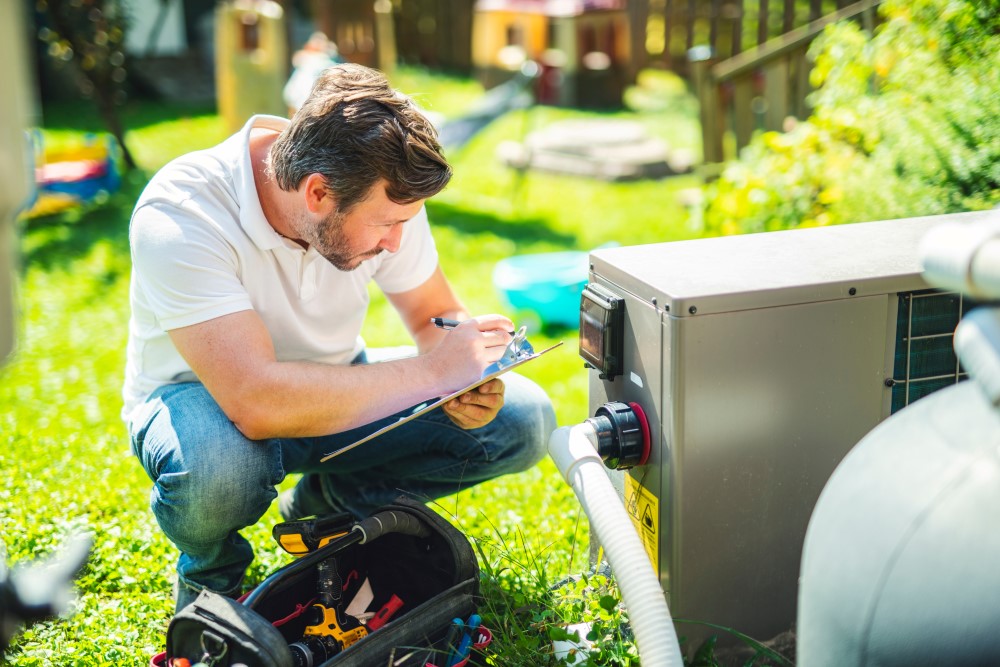
Ask your pool builders about alternatives, like heat pumps or solar pool heaters. Both are more energy efficient than traditional options. They can also be cheaper, especially if your new solar pool heater gets enough sunlight.
But before you land on any single choice, ask them about the pros and cons of each. You’ll want to know about things like operating costs and how effective they are for the climate before committing to anything.
What Kind of Pool Filter Will You Install, and How Energy Efficient Is It?
Filters are crucial for squeaky-clean pool water, but some of them are shockingly expensive to operate. Cartridge filters are almost always the best way to go if you want energy efficiency. They don’t need as much pressure, so the pool pump doesn’t need to work nearly as hard. These filters are also relatively easy to clean and replace compared to other options, and they don’t require backwashing.
This is another moment to double-check that this filter type still makes sense in your situation, even if it’s overall the “best.” Ask about how each type of filter compares in terms of energy usage and maintenance. You might find that something else fits better.
Can We Use LED Lighting for the Pool and Landscaping?
LED lights are the king of outdoor ambiance. The average incandescent bulb is nowhere near as energy-efficient, and it just won’t set the same mood. LED lighting is proof that more sustainable options can be just as fun as they are cost-effective!
These lights are also the obvious choice if you want to save money without saving all of your swimming for daylight hours. They use up to 75% less energy and last much longer than incandescent lights. Pool companies should have no problem recommending LED lights both for the pool itself and the landscape. They can even point you toward color-changing options for extra flair at a fraction of the cost.
Do You Offer Automation Systems to Optimize Energy Use?
The future of pool ownership is “set it and forget it.” And not just because it’s convenient, but because it can create schedules that optimize your systems for maximum efficiency. If you aren’t controlling your swimming pool from your smartphone or tablet, you’re missing out on some serious savings.
You want to work with pool builders who can point you in the right direction toward automation systems that fit your lifestyle. This means honing in on what matters most. Some pool owners might prefer more control over pumps and lights, while others prefer a system that focuses on keeping chemicals balanced.
Either way, you want to make sure that these integrate with smart home systems (especially if you already use them), so remember to check in with your builder.
Do You Install Additional Returns for Better Circulation?
You don’t want your pool water just sitting there. It needs to circulate to stay healthy; otherwise, you’ll have cloudy water and a pump that’s pushing itself to the brink. This extra effort to push chemicals and fresh water throughout your pool leads to higher energy costs and the potential for more mechanical problems.
The more returns, the better the water circulation in your swimming pool. One or two is not enough — many professionals opt for as many as six to guarantee better chemical and heat distribution. This also takes the pressure off your pump, so ask what your pool builder thinks is a “good” number.
Do You Offer Ozone Systems to Reduce Chlorine and Energy Use?
Ozone systems are more popular than ever. They reduce chlorine dependency and allow the salt cell to run less often, leading to lower energy consumption and less wear and tear on the cell. For anyone tired of their hair and skin smelling like chlorine after a dip, this kind of energy-efficient system could be the relief you’re looking for.
You want your builder to be at least familiar with ozone systems, but it’s ideal if they have experience installing them. See what they say about what you can expect to save on chemicals and energy bills. They should have some ball-park numbers to give you if they know their stuff.
The Pool Builders Who Can Answer All Your Questions About Energy-Efficient Features
Our pool builders always have energy efficiency at the top of our list. Save yourself from having to ask around to see which ones have the right answers. Contact Blue Haven Pools on the Gulf today and start designing a dream swimming pool without nightmarish costs.